Retro Mannequins SVG Review
As a designer who spends more time staring at stitch lines than actual sleep, I approach every new digital asset with a mix of optimism and skepticism. We have all been there: you find the perfect graphic for your next Etsy listing or client project, download it, and then wonder if it will actually translate well to fabric. That is exactly where I started when I pulled Retro Mannequins SVG, Tailors Dummy DXF into my workspace. This file sits squarely in the intersection of Crafts and Graphics, promising a blend of vintage charm and functional utility. But does it hold up under the needle? After testing this design through various scenarios—from custom apparel to boutique branding—I have some practical insights to share.
The First Impression: Mood and Visual Personality
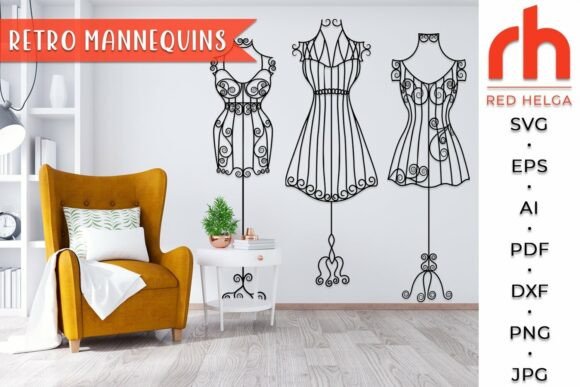
When you first open the vector files, the immediate takeaway is the clean, iconic silhouette. The design captures the essence of a traditional tailor’s dummy without getting bogged down in unnecessary clutter. For an embroidery designer, this is crucial. There is something inherently satisfying about a shape that reads instantly from a distance but still offers enough structural integrity to look good up close. The retro vibe is subtle yet distinct; it evokes a sense of nostalgia that fits perfectly with current trends in handmade goods and vintage-inspired decor.
The visual personality here is professional yet approachable. It feels like a design that belongs in a well-curated studio or a cozy craft room. Unlike overly complex illustrations that can turn into a muddy mess when stitched, this silhouette relies on strong lines and clear negative space. This simplicity is its greatest strength, allowing the thread colors and texture of the fabric to take center stage rather than fighting against intricate details that might get lost in the stitching process.
Real-World Application: From Screen to Stitch
I decided to put Retro Mannequins SVG, Tailors Dummy DXF to the test by imagining it as part of a real product line. My first scenario was a custom embroidered tote bag for a local sewing workshop. The goal was to create a handmade product that felt premium but accessible. Using a neutral canvas tote, I planned to use a bold, contrasting thread color for the main body of the mannequin. Because the design is essentially a silhouette, it translates beautifully to fill stitches or applique techniques. The result was crisp, modern, and instantly recognizable. It gave the tote bag a cohesive brand identity that looked far more expensive than the materials suggested.
Another compelling use case is custom apparel, specifically sweatshirts or heavy cotton tees. The retro aesthetic pairs exceptionally well with the casual, comfortable nature of knit fabrics. I envisioned a small placement embroidery on the chest of a crewneck sweatshirt, perhaps paired with minimal typography. The clean lines of the tailors dummy would stand out sharply against the textured surface of the jersey knit, creating a tactile visual appeal that customers love. It works equally well as a larger back print on a hoodie, serving as a statement piece for fashion-forward individuals who appreciate niche design aesthetics.
Beyond apparel, this design has significant potential in home decor. Imagine a set of kitchen towels or tea towels featuring this motif. The vertical orientation of many mannequin designs fits naturally within the standard dimensions of these items. It adds a touch of whimsy and professionalism to a kitchen setting, making it an ideal personalized gift for someone who loves sewing or cooking. The versatility extends to nursery decor as well, where a softer color palette could transform the image into a charming, gender-neutral wall art piece or a gentle accent on a baby blanket.
Where Caution Is Required
While the design is robust, no embroidery file is universally flawless. There are specific contexts where Retro Mannequins SVG, Tailors Dummy DXF requires careful consideration. One area to watch is small hoop sizes. If you attempt to digitize or cut this design at a very small scale, you risk losing the defining characteristics of the silhouette. Tiny lettering or minute decorative accents—should they be added later—can become illegible or distorted. Always ensure the final stitched size retains enough resolution for the eye to appreciate the shape.
Fabric choice also plays a critical role. Textured fabrics, such as heavy bouclé or loose-weave linen, can obscure the clean edges of the design. Similarly, stretchy knits may distort the symmetry of the mannequin if not stabilized properly. Dark fabrics present another challenge; while high-contrast threads work well, low-contrast combinations (like dark grey on black) can make the design disappear entirely. I recommend always testing your thread color choices against your base fabric before committing to a full production run. Additionally, curved surfaces like caps or hats require precise hooping and tension adjustments to prevent puckering, which can warp the elegant lines of the tailors dummy.
Practical Designer Notes for Success
To get the best results from this embroidery file, I suggest following a few key steps. First, always test the design on scrap fabric that matches the weight and texture of your final project. This helps you gauge how the stitch density interacts with the material and whether any adjustments to tension or stabilizer type are needed. Check the thread colors carefully; what looks vibrant on screen might appear dull in person due to lighting differences.
Inspect the smaller details closely. Even in a simple silhouette, corners and curves should be smooth. If you are using this as an applique design, ensure your cut lines are precise to avoid fraying edges. Consider running a black-and-white mockup of your final layout to check for balance and contrast. Does the design feel too heavy on one side? Is there enough breathing room around the edges? These visual checks are essential for maintaining a professional appearance.
Furthermore, confirm the licensing terms before selling finished items. While the source mentions it is a cut file for Cricut or Silhouette, verify whether commercial rights are included for both physical products and digital assets. This protects your craft business and ensures you are complying with the creator’s wishes. Helga, the creator, notes that each design is part of her dream, implying a level of care and intentionality that deserves respect in how it is used and distributed.
Final Verdict: A Versatile Asset for Creative Entrepreneurs
In conclusion, Retro Mannequins SVG, Tailors Dummy DXF is a solid addition to any designer’s library. Its strength lies in its clarity, nostalgic appeal, and adaptability across multiple mediums. Whether you are an Etsy seller looking to expand your home decor collection, a small shop owner creating branded merchandise, or a hobbyist making a unique gift, this design delivers on its promise. It elevates the perceived value of a finished product through its clean, professional aesthetic.
By understanding its limitations regarding scale and fabric compatibility, you can leverage its strengths to create engaging, high-quality embroidery projects. It is not just a graphic; it is a tool for storytelling, connecting the history of tailoring with modern creative expression. For those willing to put in the prep work, the return on investment in terms of customer satisfaction and brand consistency is well worth it.