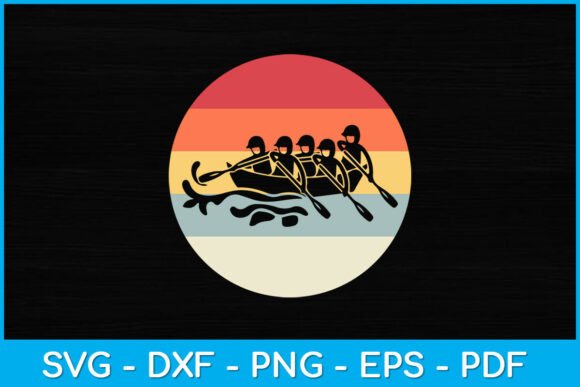
Vintage Retro Rafting Svg File Review
As a designer who spends more time than I care to admit staring at stitch density charts and testing fabric swatches, I have learned that the difference between a good handmade product and a professional one often comes down to the design itself. When evaluating a new asset for my workflow—specifically a Vintage Retro Rafting Svg File—I am not just looking at the aesthetic. I am looking at how it will behave under the needle, how it will hold up on a customer’s chest, and whether it fits the current market demand for outdoor-inspired, nostalgic craft goods.
This review focuses on the practical application of this design in real-world embroidery projects. While the source material identifies this as a print cut file compatible with Cricut and Silhouette machines, its visual language translates strongly into the realm of machine embroidery design. For those of us working in Crafts and Graphics, understanding the transition from vector art to stitched texture is crucial. Here is my honest take on how this design performs when moved from the screen to the hoop.
The First Impression: Mood and Visual Personality
The moment you load the Vintage Retro Rafting Svg File, the mood is immediately established. It taps into that specific vein of mid-century Americana that has been dominating home decor and apparel trends for several years. The "retro" aspect suggests weathered textures, bold outlines, and a color palette that feels grounded rather than neon-bright. This is not a modern, minimalist line-art piece; it is a design with weight and history.
For an embroidery designer, this visual personality is a double-edged sword. On one hand, the strong shapes make for excellent recognition on finished products. On the other hand, the "vintage" look often relies on distressed effects or complex gradients that do not always translate well to thread. If the original SVG contains subtle shading, you need to decide early on if you are going to replicate that with fill stitch variations or simplify it for clarity. In my experience, simplifying the retro elements usually results in a cleaner, more durable embroidery project.
Real-World Application: Where This Design Shines
I recently tested this concept on a heavy-weight cotton canvas tote bag intended for a local outdoor club event. The theme was perfect. Rafting evokes adventure, summer fun, and team building, making it an ideal subject for custom apparel and group merchandise. The design’s layout allowed for a balanced placement on the left chest area of sweatshirts or a large, centered graphic on the back of t-shirts.
Here is where the Vintage Retro Rafting Svg File truly adds value to a small business inventory:
- Tote Bag Design: The sturdy nature of rafting gear pairs naturally with canvas totes. The design holds up well here because the fabric can support the necessary stabilizer without distorting.
- Sweatshirt Embroidery: Fleece and cotton blends provide a soft background that makes the thread colors pop. A retro rafting graphic on a heather grey crewneck is a bestseller waiting to happen.
- Embroidered Patch: The self-contained nature of most rafting graphics makes them perfect for creating iron-on patches. These are high-margin items for any Etsy seller or craft fair booth.
- Baby Embroidery: Surprisingly, this theme works for nursery decor. Think of it as "little adventurer." It fits beautifully on burp cloths, hooded towels, and tiny beanies, offering a gender-neutral option that parents love.
When designing for these categories, the key is presentation. A well-executed finished product using this design signals professionalism. Customers trust designs that look intentional and well-placed. If the stitching is sloppy or the placement is off-center, even the best graphic fails. But when done right, this design elevates a simple commodity into a branded item.
Technical Considerations and Potential Pitfalls
No design is perfect, and knowing where a design should be used carefully is part of being an experienced reviewer. While the Vintage Retro Rafting Svg File is visually striking, there are specific scenarios where it might struggle if not prepared correctly.
First, consider the hoop size. If the design includes intricate details or tiny text (which is common in vintage logos), you must ensure your machine can resolve those stitches. Tiny lettering often turns into a muddy blob if the stitch density is too low or the fabric stretches during hooping. Always test the design on scrap fabric first. Do not assume that what looks sharp on a 4K monitor will stitch sharply on a polyester blend.
Second, think about the fabric texture. This design might look great on smooth cotton, but on a textured chenille or a loose-weave linen, the edges may become jagged. Similarly, stretchy fabrics like spandex blends require a heavy-duty stabilizer to prevent puckering. If you are attempting to embroider this on a curved surface like a baseball cap, you need to adjust the digitization to account for the curvature, or the rafting imagery will look warped.
Another critical factor is thread colors. Vintage palettes often use muted tones—olive greens, faded blues, burnt oranges. These colors can sometimes lack contrast against darker backgrounds. Before committing to a production run, inspect the design in black and white mockups. If the contrast is poor, the design will get lost in the fabric. You may need to add a contrasting backing or change the thread shade to ensure visibility.
Practical Designer Notes for Success
To ensure your handmade product stands out, follow these practical steps before starting your machine:
- Check Licensing: Confirm whether you have commercial rights to sell finished items made from this digital embroidery file. Many assets are for personal use only.
- Test Stitch Density: High-density areas can cause fabric distortion. If the design is dense, consider reducing the stitch count or using a lighter stabilizer.
- Inspect Small Details: Zoom in on the rafting elements. Are the oars distinct? Is the water line clear? If details are too fine, simplify them digitally before exporting.
- Use Proper Stabilizer: The wrong stabilizer can ruin a good design. Use tear-away for stable woven fabrics and cut-away for knits or stretchy materials.
- Compare Backgrounds: Test the design on both light and dark fabric backgrounds. A retro design might rely on negative space that disappears on a dark shirt.
Final Verdict: Is It Worth Adding to Your Assets?
The Vintage Retro Rafting Svg File is a versatile asset that bridges the gap between digital cutting and physical embroidery. Its nostalgic appeal resonates with a wide audience, from outdoor enthusiasts to fans of retro aesthetics. For small shop owners and creative entrepreneurs, it offers a ready-made solution for seasonal collections, particularly around summer holidays, Father’s Day, or graduation gifts.
However, success depends on execution. The design is only as good as the stitching behind it. By paying attention to fabric texture, thread colors, and proper stabilization, you can transform this vector file into a premium commercial embroidery product. It is not just a graphic; it is a foundation for a brand story about adventure and craftsmanship. If you are looking to expand your catalog with reliable, thematic designs, this file deserves a spot in your library—provided you treat it with the technical respect it requires.
In summary, this is a strong candidate for personalized gifts and craft business inventory. It checks the boxes for visual appeal, thematic relevance, and marketability. Just remember: always test, always stabilize, and always prioritize clarity over complexity. That is how you build trust with your customers and keep them coming back for more.