Howdy Cow Svg, Retro, Cowboy Embroidery Review
As a designer who spends half my life staring at stitch density charts and the other half trying to convince clients that "simple" is actually hard to execute well, I approach every new digital asset with a healthy dose of skepticism. The market is flooded with generic clip art masquerading as premium design files. However, when I pulled up Howdy Cow Svg, Retro, Cowgirl, Cowboy, I paused. There is something inherently charming about this specific aesthetic, but charm doesn't pay the bills—usability does. I wanted to take this machine embroidery design out of the theoretical realm and put it through the wringer of real-world application. Would it hold up on a cotton canvas tote? Would it look professional on a baby onesie? Or would it turn into a tangled mess in a small hoop?
The First Impression: Mood and Visual Personality
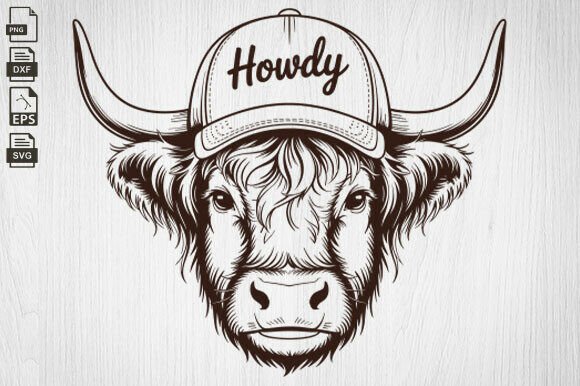
The moment you open the file, the retro vibe hits you. This isn't just a cow; it’s a character. The title Howdy Cow Svg, Retro, Cowgirl, Cowboy suggests a playful, nostalgic energy, and visually, it delivers. The lines are clean, suggesting a strong vector foundation which is crucial for any embroidery file. In the world of Graphics and Crafts, simplicity is often the hardest thing to master, yet this design manages to be detailed enough to be interesting without being so complex that it becomes a nightmare to digitize.
The visual personality leans heavily into Americana and western themes, but with a modern, softened twist. It feels like something you’d see on a vintage diner sign or a high-end boutique hat in Nashville. For an Etsy seller or a small shop product owner, this mood is gold. It evokes feelings of comfort, rustic charm, and handmade authenticity. When customers browse your shop, they aren't just buying a cow; they are buying into a lifestyle aesthetic. This design taps directly into that desire for handmade product quality with a distinct brand identity.
Real-World Application: From Screen to Stitch
Let’s talk about where this design truly shines. I immediately envisioned this embroidery project applied to a sturdy canvas tote bag. The bold nature of the retro style stands up well against the heavy texture of canvas. However, I also saw potential in softer fabrics. Imagine this stitched onto a cream-colored sweatshirt for a winter holiday collection. The contrast between the soft fleece and the crisp, retro lines creates a tactile appeal that photographs beautifully for social media marketing.
Another strong use case is personalized gifts. Because the design has a friendly, approachable face, it works exceptionally well for baby embroidery. A onesie or a burp cloth featuring this cow adds a touch of whimsy that parents love. It’s not too aggressive, not too childish, just right for a nursery theme. Furthermore, for the craft business owner looking to expand their inventory, this design translates seamlessly to custom apparel like denim jackets or flannel shirts. The retro color palette (assuming you choose appropriate thread colors) will pop against dark denim, creating a high-value finished product that can command a higher price point.
I also considered its utility as an embroidered patch. If you are selling patches as accessories for backpacks or beanies, the self-contained nature of this design means it likely requires minimal background fill, making it efficient to produce. Efficiency is money in the world of commercial production. If you can stitch it faster without sacrificing quality, your margins improve. This design feels optimized for that balance.
Where Caution Is Required
While I am a fan, no designer gives a blind endorsement. There are scenarios where Howdy Cow Svg, Retro, Cowgirl, Cowboy might struggle. First, consider the hoop size. If you attempt to scale this down too small, you risk losing the integrity of the facial features. Tiny lettering or intricate details can merge together if the stitch density is too high for the fabric weight. Always test on scrap fabric first. I cannot stress this enough. What looks clear on a 4K monitor might look like a blob under the presser foot of your machine.
Textured fabrics are another pitfall. While the design looks great on smooth cotton or canvas, try stitching it on a highly textured boucle wool or a nubby linen, and you may find the stitches sinking into the fabric, losing definition. Similarly, stretchy knits require a heavy-duty stabilizer to prevent distortion. If you are working on a t-shirt jersey, ensure you have the right support, or you might end up with a wavy, unprofessional result.
Dense stitch areas should be inspected closely. If the digitizer used too much fill stitch in certain areas, it could create a stiff, board-like feel on the finished garment. This is particularly noticeable on aprons or kitchen towels where flexibility matters. You want the fabric to drape naturally, not stand up like cardboard. Check the back of your sample to ensure the backing isn't overly thick, which can be uncomfortable against the skin on baby clothes.
Strategic Value for Sellers and Makers
From a business perspective, this design offers significant value. In the crowded marketplace of digital product sellers, having assets that are versatile is key. This isn't just a one-trick pony. It fits into multiple niches: western wear, farm-themed decor, animal lovers, and retro enthusiasts. By incorporating this into your design assets library, you cover multiple customer bases with a single SKU.
The aesthetic also lends itself well to printable mockups. Because the design has a strong silhouette, it reads well even in thumbnail images on Etsy or Pinterest. This increases click-through rates. Buyers can instantly recognize the style. It communicates professionalism and trend-awareness. When you present a commercial embroidery service using this design, you are showing that you understand current aesthetics. It builds trust. Customers want to know that the person stitching their order knows what they are doing.
Practical Designer Notes for Execution
- Thread Color Contrast: Don’t just default to black thread. Experiment with earth tones, mustard yellows, or dusty pinks to enhance the retro vibe. The right thread colors can elevate a good design to a great one.
- Stabilizer Choice: Match your stabilizer to your fabric. Cut-away for knits, tear-away for wovens. Using the wrong stabilizer is the #1 cause of failed embroidery projects.
- Black and White Mockups: Before you commit to a color scheme, view the design in grayscale. Does the shape still read clearly? If the negative space is cluttered, you may need to adjust the layout.
- Licensing Verification: Even though this is listed as an instant download, always double-check the license terms. Are you allowed to sell unlimited physical items? Is there a cap on units? Confirming these details protects your craft business from legal issues.
- Hoop Size Confirmation: Ensure the design fits comfortably within your standard hoops. Trying to trim a design that is slightly too large can ruin the symmetry.
Final Verdict
Howdy Cow Svg, Retro, Cowgirl, Cowboy is more than just a cute image; it is a functional, market-ready machine embroidery design with strong commercial potential. It balances aesthetic appeal with practical stitchability, making it a valuable addition to any designer's toolkit. Whether you are creating a heartfelt personalized gift for a friend or building a robust catalog for your online store, this design delivers. Just remember: the magic happens in the testing phase. Respect the fabric, respect the machine, and let the design do its work. With proper execution, this cow is ready to make a lasting impression on your customers.